The 15 Most Common Wedding Dress Stains (and Why Time Matters): A Complete Guide to Wedding Dress Cleaning & Preservation
Your wedding dress is one of the most treasured garments you’ll ever own. Whether you plan to preserve it as a family heirloom or simply want it to look as beautiful as it did on your wedding day, professional wedding dress cleaning is one of the most important steps you can take.
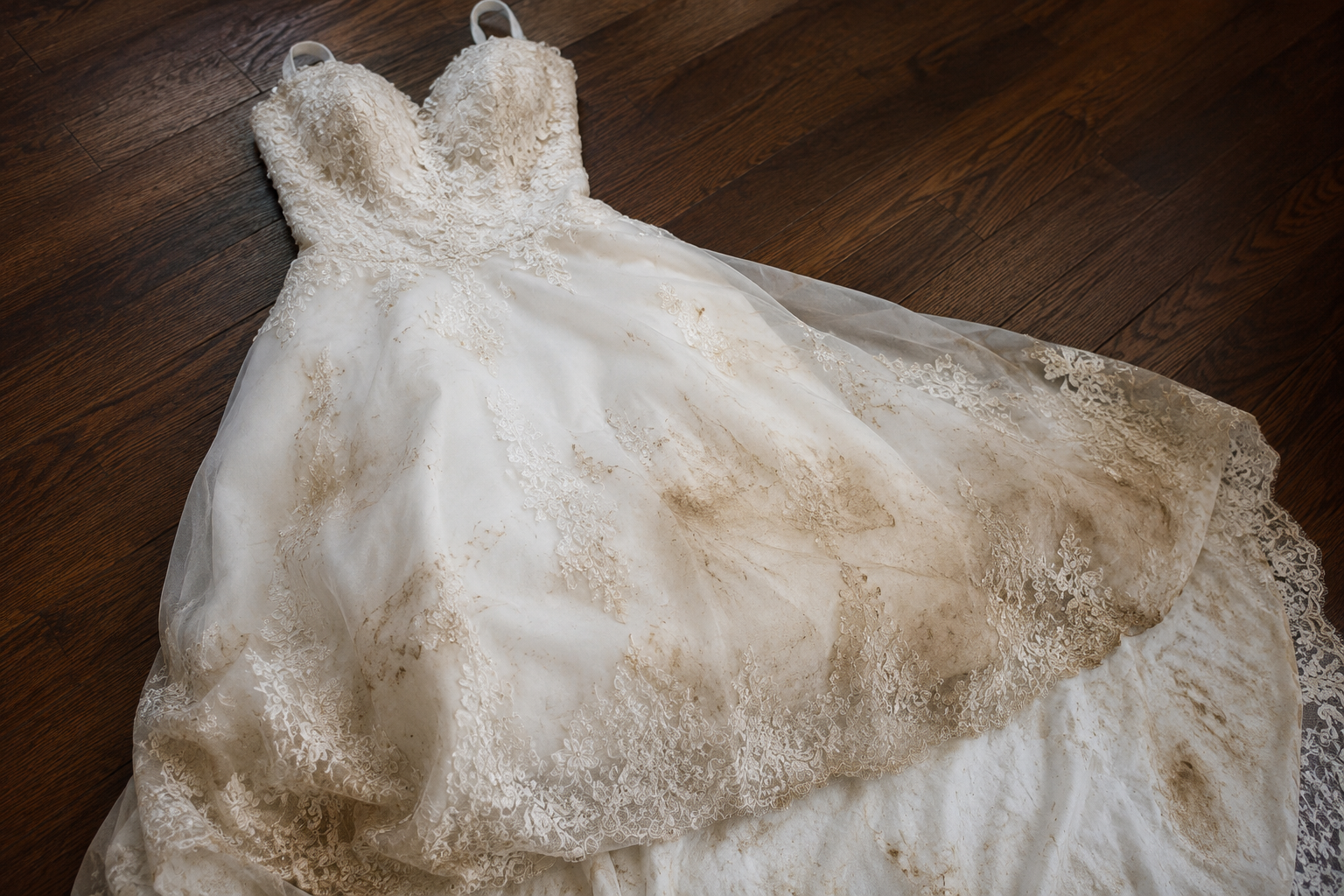
Many brides assume that if a stain isn’t visible, it isn’t there. Unfortunately, that’s not true. Sweat, champagne, body oils, cake frosting, and other invisible residues can slowly oxidize, causing your once-white gown to develop yellow or brown stains months or even years later.
At Treasured Garment Restoration, we specialize in wedding dress cleaning, wedding gown preservation, and vintage garment restoration. Here are the 15 most common wedding dress stains we see—and why having your gown professionally cleaned as soon as possible gives you the best chance of complete stain removal.
Why You Should Clean Your Wedding Dress Immediately
The days after your wedding are busy, but don’t let your gown sit in a closet or garment bag for months.
The longer stains remain in delicate fabrics like silk, satin, lace, chiffon, or tulle, the more they bond with the fibers. Some stains become permanent over time, making restoration much more difficult—and sometimes impossible.
Professional wedding dress cleaning and preservation removes visible and invisible stains before they can permanently damage your gown.
1. Champagne & Wine Stains
The wedding toast is one of the happiest moments of the day—and one of the most common causes of stains.
Both red and white wine contain sugars, tannins, and acids that can discolor fabric over time. Even if the spill dries clear, it can oxidize into a noticeable yellow or brown stain.
Best solution: Professional wedding dress cleaning as soon as possible.
2. Cake Frosting & Dessert
Buttercream frosting contains butter, shortening, sugar, and food coloring. Oils left behind often become yellow spots months after the wedding.
3. Makeup Stains
Foundation, lipstick, mascara, blush, and bronzer frequently transfer onto:
-
Necklines
-
Straps
-
Sleeves
-
Bodices
-
Veils
Professional cleaners use specialized techniques designed for delicate bridal fabrics instead of harsh stain removers.
4. Sweat & Body Oils
This is one of the biggest reasons wedding dresses yellow.
Sweat and natural body oils are often invisible immediately after the wedding. Over time they oxidize, creating the familiar yellow discoloration many brides discover years later.
5. Dirt & Dust
Outdoor ceremonies, gardens, barns, beaches, vineyards, and even church steps leave dirt along the hem and train.
Although these stains may seem minor, abrasive soil can slowly wear delicate fibers if left untreated.
6. Grass Stains
Grass contains chlorophyll, one of the most difficult natural dyes to remove from fabric.
The sooner your gown receives professional treatment, the greater the chance of completely removing green stains.
7. Food & Sauce Stains
Reception dinners commonly leave stains from:
-
Gravy
-
Marinara sauce
-
Chocolate
-
Berries
-
Salad dressing
-
Cooking oils
Many contain proteins and oils that become increasingly difficult to remove over time.
8. Perfume
Many perfumes contain oils and alcohol that can discolor silk and other delicate fabrics.
Spraying perfume directly onto your dress is never recommended.
9. Blood
Small cuts, blisters, or pinpricks during alterations can leave blood stains.
Blood is protein-based, making prompt professional treatment extremely important.
10. Rust
Rust stains occasionally come from:
-
Outdoor venues
-
Vintage hangers
-
Decorative metal chairs
-
Old storage containers
Rust should never be treated with household cleaners because many products permanently damage bridal fabrics.
11. Ink
Signing the guest book or carrying a pen during the reception can lead to accidental ink marks.
Ink spreads quickly through delicate fabrics and requires specialized stain removal.
12. Candle Wax
Wax itself is usually removable, but melted wax can trap dirt and dyes underneath it.
Professional restoration safely removes both the wax and any remaining residue.
13. Spray Tan & Self-Tanner
Bronzing products frequently transfer to:
-
Bodices
-
Straps
-
Underarms
-
Interior linings
Professional bridal gown cleaning removes these cosmetic residues before they become permanent.
14. Flower Pollen
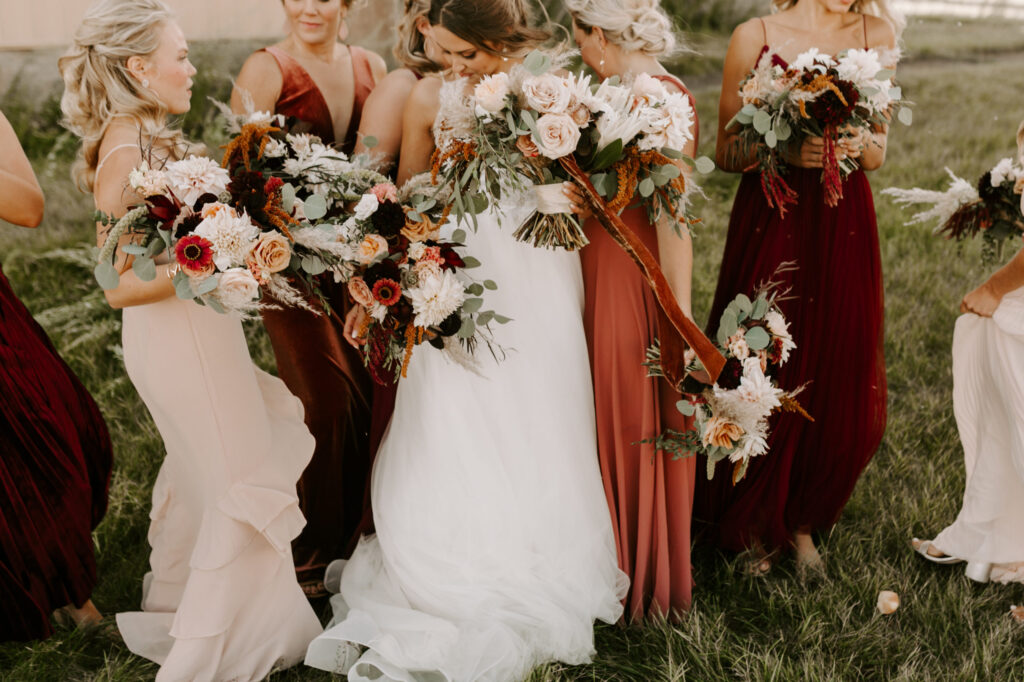
Bouquets are beautiful—but pollen is surprisingly damaging.
Never rub pollen into the fabric. This pushes the pigment deeper into the fibers and makes removal much more difficult.
15. Invisible Stains
These are the stains brides never see coming.
Invisible stains include:
-
Champagne
-
White wine
-
Clear soda
-
Sweat
-
Body oils
-
Sugar
-
Clear frosting residue
Months or years later, these hidden stains often appear as yellow or brown spots, leading many brides to believe their dress has “aged.” In reality, the discoloration usually comes from untreated residue left behind after the wedding.
What Happens During Professional Wedding Dress Cleaning?
Many brides wonder what actually happens after they bring in their gown.
A professional wedding dress cleaning typically includes:
-
Detailed inspection of the gown
-
Identification of visible and hidden stains
-
Gentle hand treatment of delicate areas
-
Cleaning using methods appropriate for the fabric
-
Final inspection
-
Wedding dress preservation using acid-free materials designed for long-term storage
Each gown is unique, which is why professional cleaners customize the process based on the fabric, embellishments, age, and condition of the dress.
Can Old Wedding Dress Stains Be Removed?
In many cases, yes.
Even dresses that have been stored for years can often be restored by experienced garment restoration specialists.
However, fresh stains are almost always easier to remove than stains that have been allowed to oxidize for months or years. That’s why cleaning your wedding dress shortly after your wedding gives you the best opportunity for long-term preservation.
Trust Your Wedding Dress to a Professional
Your wedding gown represents one of the most meaningful days of your life. Professional wedding dress cleaning and preservation protects that investment and helps ensure your gown remains beautiful for future generations.
If your wedding was recent—or if you’ve discovered yellowing or stains on an older gown—the sooner you have it professionally evaluated, the better the chances of successful restoration.
Don’t wait for stains to appear. Professional wedding dress cleaning today can preserve your memories for decades to come.